

Himalayan Salt Lick for Horses
Himalayan Salt Block for Horses
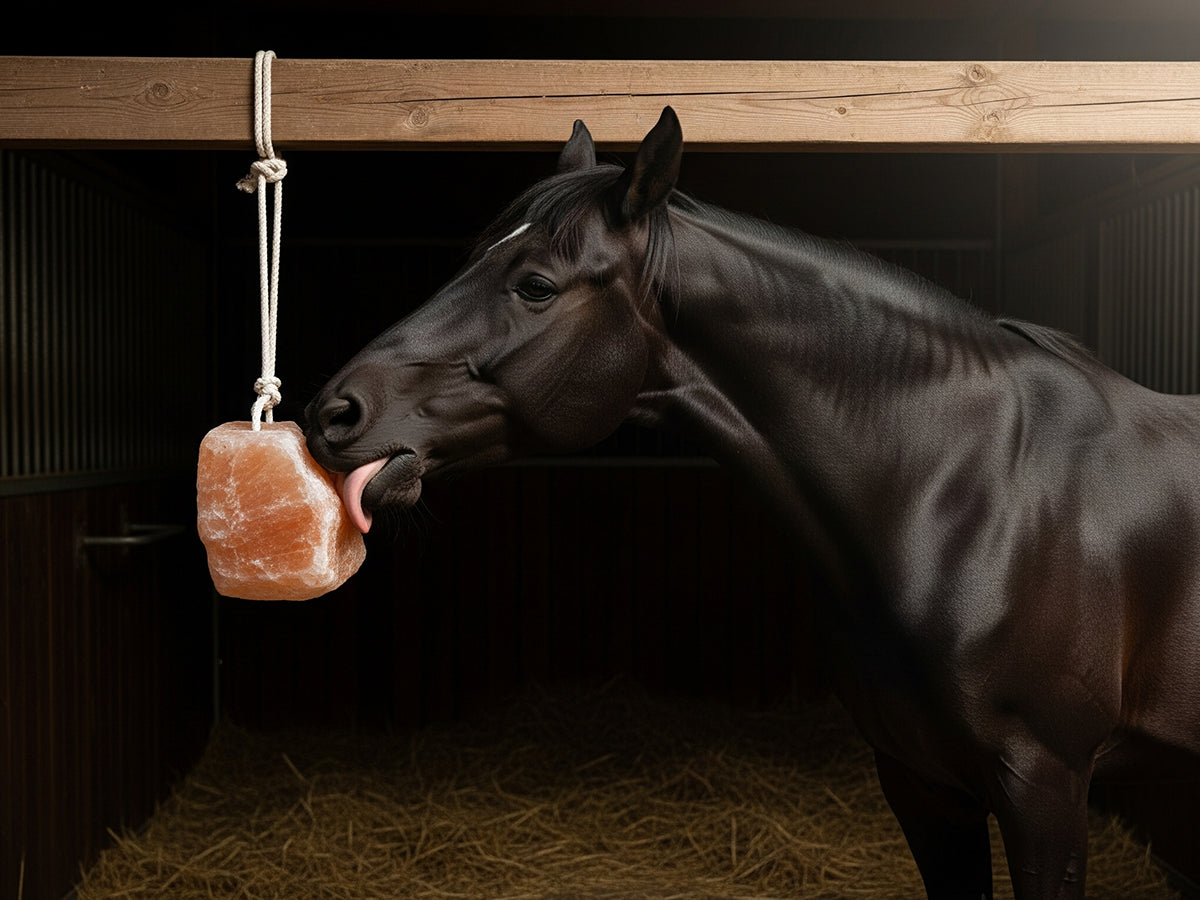
Every horse needs salt every day, and hay and grass don't supply enough of it. A salt block for horses lets yours take salt whenever they need it, in the stall, paddock or trailer. Our Himalayan salt lick for horses is a dense 8–9 lb block of natural rock salt with a rope fitted, so you can hang it the day it arrives. It's a simple equine salt lick with nothing added: pure Himalayan salt for horses, with no molasses, sugar or fillers.
- 100% natural rock salt
- Rope included
- No molasses, iodine or dye
- Same-day shipping by 2 PM ET

8–9 lb
Bigger than most horse salt licks
From $12.90
As low as $8.06 per block
Rope fitted
No holder needed
Ships from Maryland
3–5 business days
Salt basics for horses
Do Horses Need a Salt Block?
Yes. An average 1,100 lb horse needs about 1 ounce (around 2 tablespoons) of salt a day just at rest, and much more when it sweats. Hay, grass and most grain are low in sodium, so horses can't get enough from feed alone. A salt block gives your horse free-choice access to salt all day.
How much salt does a horse need?
Salt is about 39% sodium and 61% chloride. Both help your horse hold water in its body, drink enough, move its muscles and digest food. Horses lose both in sweat, so the harder and hotter the day, the more salt they need.
| Your horse's day | Rough salt need (1,100 lb horse) | What that means |
|---|---|---|
| Resting, cool weather | About 1 oz (25–30 g) | A salt block is usually enough. |
| Light work or warm weather | About 2 oz | Make sure the block is always in reach and water is nearby. |
| Hard work, heavy sweating, hot and humid days | Up to about 7 oz (200 g) | Many horses need loose salt or electrolytes on top of the block. Ask your vet. |
Figures based on the National Research Council's Nutrient Requirements of Horses (2007) and Kentucky Equine Research. Ponies and minis need less; scale down by body weight.
Choose Your Salt Lick for Horses
All three sizes are the same natural Himalayan salt with a rope fitted. Most horse owners pick the 8–9 lb block. Boarding barn or stable? Bigger packs bring the price per block down.
Common question
Why Is My Horse Licking the Salt Block So Much?
A horse licking its salt block a lot is usually normal. Most horses lick more in hot weather, after hard work, when they sweat, or when a new block first goes up. As long as your horse has plenty of fresh water and drinks it, the body flushes out extra salt in urine.
Equine nutritionist Dr. Nettie Liburt has noted this is one of the most common questions horse owners ask. Her point is simple: salt dissolves in water, so heavy licking isn't a worry for a healthy horse that's drinking well.
What if my horse barely touches the block?
Some horses don't lick enough from a hard block. A horse's tongue is smoother than a cow's, so it takes more effort to get salt off a solid block. If your horse ignores the block, or you see it chewing wood or dirt, try these:
-
Move the block
Hang it near the water or hay where your horse spends most of its time.
-
Give it a week
Some horses take a few days to start using a new block.
-
Add loose salt to feed
Ask your vet about adding a measured amount of plain salt to your horse's feed each day, and keep the block up too.
Compare
Himalayan Salt Block for Horses vs. Other Horse Salt Blocks
Feed stores sell several kinds of salt blocks for horses. Here's how they compare, in plain terms.
| Type | What it is | Good for | Watch out for |
|---|---|---|---|
| Himalayan salt block (ours) | Natural rock salt, cut in one piece | Hanging in stalls and trailers; lasts well; no additives | Not a full mineral supplement |
| White salt block | Pressed, refined salt; sometimes iodized | Cheap, easy to find | Softer, wears and crumbles faster; often needs a holder |
| Trace mineral block (red/brown) | Pressed salt with small amounts of added minerals | Covers salt and a little extra | Supplies only a small share of a horse's mineral needs |
| Sulfur block | Salt with added sulfur | Sold for fly control | Vets advise checking with them first; too much sulfur can cause health problems |
| Garlic block | Salt flavored with garlic | Sold for fly control | Garlic can be harmful to horses in large amounts over time |
Honest answer
Salt Block vs. Mineral Lick for Horses
Our Himalayan salt block is mostly sodium chloride, with small natural amounts of potassium, calcium, magnesium and iron. It covers your horse's salt needs. It isn't a complete mineral supplement, and we don't sell it as one.
A horse mineral lick or mineral block for horses adds trace minerals like copper, zinc and selenium, but in small amounts. Kentucky Equine Research found that one popular trace mineral block supplied less than a tenth of a horse's daily copper, manganese and iron needs. A horse would have to eat far too much salt to get its minerals that way.
That's why many vets and equine nutritionists suggest a simple setup: a plain salt block always available, plus a ration balancer or vitamin-mineral supplement fed in measured amounts.
How to use
How to Hang a Salt Lick for Horses
Every NutriSalt block comes with a rope fitted, so you don't need a separate salt block holder.
-
Pick a spot near water
Horses drink more after taking salt. Hang the block within a few steps of a clean water bucket or trough.
-
Hang it at chest to shoulder height
High enough to stay out of bedding and manure, low enough that your horse can lick it comfortably. Lower it for ponies and minis.
-
Tie it to something solid
Use a stall ring, post or rail. Keep the rope short so the block can't swing hard or tangle a leg.
-
Keep it under a roof
Rain and dew slowly dissolve salt. Inside a stall or run-in shed, the block lasts much longer.
-
Check it every week or two
Replace the block when it gets thin or cracked, before it breaks and drops.
Hauling to a show or trail ride? A 5–6 lb block hung in the trailer gives your horse salt on the road, when it's sweating more than usual.
Lifespan
How Long Does a Salt Block Last for a Horse?
An 8–9 lb Himalayan salt block used by one horse in a dry stall often lasts a few months. It goes faster in summer, in wet spots, or when several horses share it. Check it every week or two and replace it when it gets thin.
| What changes it | Makes it last longer | Makes it wear faster |
|---|---|---|
| Shelter | Hung under a roof | Left out in rain |
| Horses using it | One horse per block | Shared by a group |
| Season and work | Cool months | Hot weather and heavy work |
| Block and habits | Bigger block (8–9 or 9–10 lb) | Horse that bites instead of licks |
Why NutriSalt
Why Horse Owners Choose Our Himalayan Salt Lick
- Bigger block for the price. Our 8–9 lb horse block starts at $12.90. Many horse salt licks on the market are 2–6 lb.
- Nothing added. No molasses, sugar, dye, iodine or filler, which matters for easy keepers and horses on low-sugar diets.
- Ready to hang. Rope fitted on every block, no holder to buy.
- Fast US shipping. Orders by 2 PM ET ship the same day from Maryland.
- Real people. Call (800) 759-7253 and talk to us about your barn.
Questions
Salt Block for Horses FAQs
Straight answers to the questions horse owners ask us most.
Do horses need a salt block?
Yes. Horses need about 1 ounce of salt a day at rest and more when they sweat, and hay and grass don't supply enough sodium. A salt block gives free-choice access so your horse can take salt when it needs it. Keep fresh water nearby at all times.
What size salt block is best for a horse?
For one full-size horse, an 8–9 lb salt block is a good fit. It's big enough to last and small enough to hang in a stall. Choose the 5–6 lb block for ponies, minis, foals and trailers, and the 9–10 lb block for a group sharing a field.
Is a Himalayan salt block good for horses?
Yes. A Himalayan salt block is natural rock salt with nothing added, and it covers a horse's daily salt need. It's harder than a pressed block, so it lasts longer and holds up better in damp barns. Its trace minerals are small, so it doesn't replace a mineral supplement.
Why is my horse licking the salt block so much?
Heavy licking is usually normal, especially in hot weather, after hard work or with a new block. A healthy horse with plenty of water flushes extra salt out in urine. Call your vet if your horse bites off chunks, drinks and urinates far more than usual, or seems unwell.
Can a horse eat too much salt?
It's rare. Horses with free access to fresh water usually take only what they need and pass any extra in urine. Problems happen mainly when water is limited or frozen. Signs of too much salt include colic, diarrhea, weakness and heavy urination, so call your vet if you see them.
Sources We Used
We base our salt advice on published equine nutrition research and vet-reviewed guides, not guesswork.
- National Research Council, Nutrient Requirements of Horses, 6th edition (2007)
- Kentucky Equine Research: The Nitty Gritty on Salt
- PetMD: What Is a Salt Block for Horses? (reviewed by Courtnee Morton, DVM)
- The Horse: Why Is My Filly Obsessed with Salt? (Nettie Liburt, PhD)
Last updated: November 2026
For stables and barns
Stocking a whole barn?
Put a salt block in every stall for less per block. Boarding barns, training yards, riding schools and tack shops can request a bulk quote.